Didn't think my face can also as before, now the development of science and technology too fast. "On January 3, Ms. Sun from jiangsu army 411 hospital dental center discharged from the navy, got rid of her pain for five years. The hospital army, vice chairman of stomatological association, director of the center for oral Liu Guoqin professor told reporters:" this is the first domestic using 3 d printing technology for titanium foil supplier alloy cases of mandibular defect individualized repairing function, function rehabilitation of patients with ideal. " 3 d printing is a manufacturing technology for discrete superposition principle, make full use of the computer aided technology, the method can be made of any shape objects, nickel based alloy production of precision, high automatic degree and the material utilization. In recent years
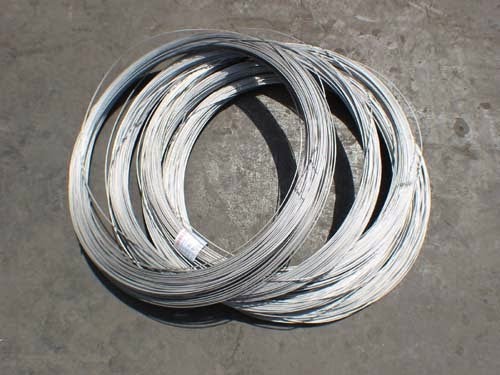
titanium wires is a silvery white metal that has many excellent properties. The density of titanium is 4.54g/cm3, 43 percent lighter than steel, lighter than the prestigious magnesium slightly heavier.
2015年5月7日星期四
2015年5月3日星期日
molybdenum sheet into the risk what size is it? This is one of the hot issues people care about. Xu Dongsheng said: "many people are worried about will not cause pathological changes of bone transplantation. In fact we are already considering this. At the beginning of the study of transplanted into the body does have some materials will accelerate the growth of cells, and even lead to cancer. More than ten years ago we began to work with others to biocompatibility, through some experiments to observe how cells will grow in the transplant, protein deposition. After many
times of experiment and clinical experience has shown that the biocompatibility of alloy is very good."According to foreign study, some of the after implanted, alloy in the plasma will spread to the surrounding soft tissues, causing inflammation and other symptoms. Whether the study shows that titanium foil supplier products bone transplantation has some inevitable bug?
2015年4月29日星期三
Medical professionals committed to high -quality titanium and titanium alloy materials, human implants of titanium and titanium alloy materials, aerospace grade titanium and medical titanium alloy materials, and other non-ferrous metal materials research and development and production. Our main products are precision titanium and titanium alloy rod , wire, pipe, sheet metal and medical grade 2 titanium wire wire, titanium rods. British Knight medical titanium products are used world-leading manufacturing technology , the use of the world's most advanced equipment manufacturing , with world-class products intrinsic quality, in addition to products for the domestic customers, but also exported to the United States , Britain, Canada , Russia, Singapore Japan , Korea, Australia and many other countries.
2015年3月12日星期四
Xinnuo titanium wires
2015年1月30日星期五
The basic properties of titanium
Atomic structure
Titanium is located in the periodic table ⅣB family, atomic number 22, atomic nuclei by protons and 22 neutrons 20-32 months, extranuclear structure arranged 1S22S22P63S23D24S2. 5x10-13 cm radius of the nucleus.
Physical Properties
The density of titanium is 4.506-4.516 g / cm (20 ℃), the melting point of 1668 ± 4 ℃, latent heat of fusion 3.7-5.0 kcal / g-atom, the boiling point of 3260 ± 20 ℃, latent heat of vaporization 102.5-112.5 kcal / gram atom, critical temperature 4350 ℃, the critical pressure 1130 atm. Thermal and electrical conductivity properties of titanium is poor, similar or slightly lower than stainless steel, titanium superconducting, titanium superconducting critical temperature 0.38-0.4K. At 25 ℃, the heat capacity of titanium is 0.126 cal / gram atom · degree, enthalpy 1149 cal / g-atom, the entropy of 7.33 cal / g atom · degree, titanium is paramagnetic, permeability of 1.00004.
titanium material has plasticity, high elongation titanium up to 50-60% reduction of 70-80%, but low intensity, not suitable for structural materials. The presence of impurities in titanium, a great effect on the mechanical properties, in particular interstitial impurities (oxygen, nitrogen, carbon) can greatly increase the strength of titanium, significantly reducing its ductility. Titanium as a structural material has good mechanical properties, that is, by strict control of impurities and where appropriate to add alloying elements to achieve.
Chemical properties
titanium plates for saleat higher temperatures, can react with many elements and compounds. Various elements, according to the occurrence of different reactions and titanium can be divided into four categories:
The first category: halogen and chalcogen covalent bond with the formation of titanium compound and an ionic bond;
The second category: transition elements, hydrogen, beryllium, boron family, clan carbon and nitrogen elements and titanium intermetallic compounds and limited solid solution;
The third category: zirconium, hafnium, vanadium family and chromium family element scandium and titanium to generate an infinite solid solution;
The fourth category: an inert gas, alkali metals, alkaline earth metals, rare earth elements (except scandium outside), actinium, thorium, which do not react with the titanium or substantially non-reactive.
2015年1月27日星期二
History of titanium
History of titanium
1791 British clergyman W. Gregor (Gregor) discovered a new metal elements in black magnetite. In 1795 the German chemist M. H. Carat Preuss (Klaproth) rutile in the study also found that the elements, and is named after the Greek god of the Titans. 1910 American scientist M. A. Hunter (Hunter) for the first time with a sodium reduction TiCI: Preparation of titanium. 1940 Luxembourg scientist W. J. Kroll (kroll) with magnesium reduction TiCl: prepared titanium. Since then, the magnesium reduction method (also known as the Kroll process) and sodium reduction method (also known as Hunt France) became the industrial production of titanium sponge method. In 1948 the United States out of the magnesium reduction process 2t titanium sponge, from reaching industrial scale. Subsequently, the United Kingdom, day / the former Soviet Union and China have also entered the industrial production, one of the major producing country of the former Soviet Union titanium, day / and the United States.
titanium target is a new metal, because it has a series of excellent features, aviation, aerospace, chemical, petroleum, metallurgy, light industry, power, desalination, ships and everyday appliances are widely used in industrial production, which is hailed for modern metal. Titanium metal production from 1948 has only half a century of history, it is accompanied by the aerospace industry and developed new industries. Its development has withstood several ups and downs, this is because titanium and aircraft industry-related reasons. Overall, however, the speed of development of titanium is very fast, it is more than any other non-ferrous metals pace of development. This can be seen from the development of the world's titanium sponge industry: titanium sponge production scale of the 1960s 60kt / a, 70 years for 1lOkt / a, 80 years of 130kt / a, to 1992 has reached 140kt / a. Actual production in 1990 reached record levels, as 105kt / a. Currently, the world's titanium sponge production capacity of manufacturers and are listed in Table 1-1.
After entering the 1990s, due to the reduced amount of titanium mesh and some Russian military and other countries to sell stocks of titanium sponge, so a few years ago a weak market. 1995 Titanium market began to rise, mainly due to a substantial increase in the amount of the civil B777 titanium and other civilian aircraft and golf clubs, titanium demand in 1996 reached a new high point. Experts predict that within the next few years the demand for titanium will continue to grow more substantial. At present, the main reason is to prevent the application of titanium expensive. It is expected that with the advancement of science and technology and titanium production process of continuous improvement, to expand production capacity and improve enterprise management level, to further reduce the cost of titanium products, is bound to open up a wider range of titanium market.
2015年1月23日星期五
Titanium Application
titanium rod is a new structural material, it has excellent performance, such as low density (~ 4.5gcm-3), strength and fracture toughness than the ratio, strength and resistance to fatigue crack propagation ability, good low-temperature toughness, corrosion excellent performance, maximum operating temperature titanium alloy for some 550ºC, is expected to reach 700ºC. So it gets increasingly widely used in aviation, aerospace, chemical, shipbuilding and other industrial sectors, is developing rapidly. Light alloy, steel, etc. (σ0.2 / density) versus temperature, stronger than the titanium alloy is higher than other light metals, steel and nickel alloys, and this advantage can be maintained to about 500ºC, so some of the titanium is adapted manufacture of gas turbine components. Approximately 80% of titanium production for the aviation and aerospace industries. Airframe structural materials such as the US B-1 bomber, the titanium about 21%, mainly used in the manufacture of the fuselage, wings, skin, and bearing components. Airframe structural materials F-15 fighter, the titanium alloy with a capacity of 7000kg, accounting for about 34% of the weight of the structure. Boeing 757 aircraft structural parts, titanium or about 5%, with a capacity of 3640 kg. McDonnell Douglas (Mc-Donnell-Dounlas) produced by DC10 aircraft alloy with a capacity 5500kg, accounting for more than 10% of the weight of the structure. The amount of titanium in the chemical and general engineering areas: United States accounts for about 15% of its production in Europe accounts for about 40%. Due to the excellent corrosion resistance of titanium mesh and its alloys, good mechanical properties, as well as qualified histocompatibility, making for the production of biological materials such as prosthetic devices.
订阅:
博文 (Atom)